Home
»
Condenser Services
»
Condenser Performance Evaluation
»
Step 2: Quantify -Translate issues into heat rate, fuel cost and emissions impact

Condenser Performance Evaluation
- Step 1: Diagnose — Identify Air In-Leakage, Fouling, and Condenser Performance Issues
- Step 2: Quantify -Translate issues into heat rate, fuel cost and emissions impact
- Step 3: Recommend — Targeted, Practical Condenser Performance Improvement Strategies
- Step 4: Validate – Confirm performance improvements post-implementation
Step 2: Quantify -Translate issues into heat rate, fuel cost and emissions impact
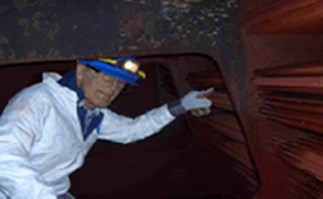
During the condenser internal inspection, Bionetics’ engineering team physically enters the condenser to verify that existing drawings accurately reflect the current as-built condenser configuration. This hands-on inspection routinely uncovers undocumented modifications and original construction changes that have never been captured in updated drawings — discrepancies that can have a significant, measurable impact on condenser performance, plant heat rate, fuel cost, and emissions output.
What Bionetics Looks for During a Condenser Inspection
Our engineers conduct a systematic examination of the condenser interior, verifying expected flow patterns, corrosion patterns, and structural conditions as predicted during the condenser drawing review phase. Critical dimensions and clearances are documented for use in later phases of Bionetics’ Power Plant Condenser Services program. Where significant findings are identified, a detailed condenser inspection report is generated outlining key observations and their projected performance impact.
Uncovering Hidden Performance Losses
Condenser inspections are one of the most powerful tools for understanding why two identically designed condensers — even units at the same plant — can operate with dramatically different performance outcomes. Bionetics’ inspection experience across numerous power plant units has revealed a consistent pattern of hidden issues, including:
- Construction deficiencies in air removal sections
- Damaged or improperly configured internal piping
- Unrecorded design modifications affecting flow and heat transfer
These previously undetected problems had significant negative impacts on measured condenser thermal performance and directly influenced the condenser retrofit modifications subsequently proposed and implemented. By quantifying each finding in terms of heat rate penalty (BTU/kWh), incremental fuel cost, and CO₂ and NOₓ emissions impact, Bionetics gives plant operators and management the precise data needed to prioritize corrective investment and demonstrate return on investment (ROI).